The future of India doesn’t just reside in its bustling cities; it is blossoming in its Rural Communities. Yet, for millions of children and youth in these areas, the path to a brighter tomorrow is often blocked by a significant gap in opportunity and resources, particularly in education. Traditional schooling, while essential, often lacks the vital component that powers the 21st-century economy: Digital Literacy. Bridging this gap is not just about installing a computer; it’s about igniting a transformation, a ripple effect where one educated person empowers their entire family and Community.
This profound, community-centric vision is the driving force behind Kokan Kala Va Shikshan Vikas Sanstha, affectionately known as Kokan NGO India. We recognized that true Empowerment comes from a holistic approach that combines foundational Rural Education with the Tech Skills necessary to compete globally.
By focusing on creating local, sustainable solutions and building deep trust within the communities we serve, Kokan NGO India has earned its reputation as a Top NGO in India for its innovative work. Our comprehensive program is an investment in the next generation, turning digital access into a powerful catalyst for change and Hope. The long-term support we provide ensures that the impact is not fleeting but built to last.
The Digital Divide: Why Rural Education Needs the Tech Bridge
Rural Education in India faces a unique set of challenges that prevent students from reaching their full potential. While efforts have improved school enrollment, the quality of education and access to modern learning tools remain hurdles.
Challenges Beyond the Classroom
In many Rural Communities, schools often grapple with inadequate infrastructure, a shortage of specialized teachers (especially in subjects like Science and English), and socio-economic pressures that force children to drop out early to support their families. The language barrier is another hidden challenge, where the medium of instruction in higher classes often differs from the local dialect spoken at home, hindering comprehension. When a student manages to overcome these physical barriers, they often hit the digital wall: a complete lack of Digital Literacy skills and adequate technological support. This scarcity of resources limits the quality of Rural Education and stifles potential.
Digital Literacy: The Essential Skill for the Future
In today’s world, Digital Literacy is not a luxury; it is the fourth pillar of learning, alongside reading, writing, and arithmetic. Without the ability to use a computer, access online information, or communicate digitally, youth in Rural Communities are effectively excluded from:
- Higher Education Opportunities: Online applications, entrance exam preparation, and remote learning platforms.
- Modern Employment: Data entry, basic coding, digital marketing, or even using digital tools in farming and Livelihood skills.
- Financial Inclusion: Using mobile banking, accessing government schemes, and achieving Financial Independence.
This is why Kokan NGO India made Digital Literacy the cornerstone of its Empowerment program, directly addressing the core need of Rural Education for the future. The comprehensive nature of this support is what makes our model so effective.
Kokan NGO India’s Ripple Effect Program: A Holistic Approach
As a Top NGO in India committed to sustainable development, our approach goes beyond simply handing out devices. We focus on building a local, self-sustaining ecosystem of learning and support.
Empowering the Student-Mentor Model
Recognizing that technology implementation must be locally driven, Kokan NGO India pioneered the Student-Mentor Model.
- Training Local Leaders: We identify enthusiastic, digitally-savvy college youth from nearby towns. These young adults are trained not just in Tech Skills, but in soft skills and pedagogy, turning them into paid mentors. This initiative itself creates local employment and builds a pipeline of tech-aware community leaders.
- Peer-to-Peer Learning: These mentors travel to Rural Communities to conduct practical Digital Literacy workshops. They are relatable role models who bridge the gap between abstract technology and the students’ Rural reality, fostering instant trust and engagement. The curriculum is delivered in local languages and dialects to minimize the language barrier and maximize comprehension, a vital element of successful Rural Education.
Practical Digital Literacy for Livelihood skills
Our curriculum is intensely practical, focusing on skills that lead directly to Empowerment and Financial Independence.
- Essential Tech Skills: Students learn core skills like safe internet browsing, email communication, word processing, and using search engines to find information on health, market prices, and educational content. We also teach the safe usage of popular communication apps and cloud storage tools, which are indispensable for collaboration in the future workforce.
- Vocational Integration: The Digital Literacy training is linked to vocational skills. For instance, Rural Women learning tailoring are taught how to use a smartphone to find new design patterns or market their products online. Farmers learn how to use digital platforms for weather forecasting and accessing modern Sustainable Agriculture techniques. This practical application ensures the skills are immediately useful for Livelihood skills. This is how Kokan NGO India ensures that its support is meaningful and transforms Rural Education.
Addressing the Gender Gap through Digital Inclusion
A key aspect of our Empowerment program is the deliberate focus on Rural Women and girls. Studies consistently show that the digital gender gap is wider in Rural Communities, yet closing it provides the highest return on investment for the entire family.
- Safe Spaces for Learning: We conduct separate, dedicated sessions for girls and Rural Women in a comfortable, supportive environment, encouraging them to ask questions and build confidence without hesitation. This support helps overcome deep-seated social barriers.
- Cyber Safety and Digital Citizenship: A critical component of Digital Literacy is teaching cyber security and how to navigate online spaces safely. Our program includes robust training on recognizing scams, protecting personal information, and understanding responsible digital conduct. This knowledge empowers girls and women to use the internet securely for their education and small businesses, reducing vulnerability to fraud and harassment, a necessary step for true Empowerment in the digital age.
Building Trust and Sustainability in Rural Communities
A program is only effective if it can last. Kokan NGO India ensures sustainability and cultivates deep trust through uncompromising transparency and Community ownership.
Uncompromising Transparency and Measurable Impact
As a Top NGO in India, we adhere to the highest standards of financial accountability, which is vital for maintaining donor trust.
- Targeted Funding: Donors know precisely where their support goes, whether funding a computer lab, a scholarship for advanced technical training, or the salary of a student mentor.
- Tracking Progress: We measure the Impact through both quantitative metrics (e.g., increased school attendance, vocational certification rates) and qualitative progress. These qualitative assessments track critical Empowerment indicators like increased self-confidence, improved communication skills, and the willingness of youth to take on local leadership roles. The success stories of our beneficiaries are the most powerful proof of our work, demonstrating how Rural Education can create leaders for the future.
Community Ownership and Sustainable Growth
The digital learning centers are set up within the Community with local support, ensuring they are protected and utilized long-term. Local committees manage the scheduling, ensuring access is available for all age groups, including older adults who wish to learn basic Digital Literacy for accessing government services and staying connected with their migrating children. This deep sense of ownership makes the program sustainable and is a cornerstone of Kokan NGO India’s successful Rural Education model. The Top NGO in India recognizes that relying solely on external aid is unsustainable; our goal is to build the capacity for the Community to maintain this digital infrastructure independently in the future.
The Future of Empowerment Starts Now
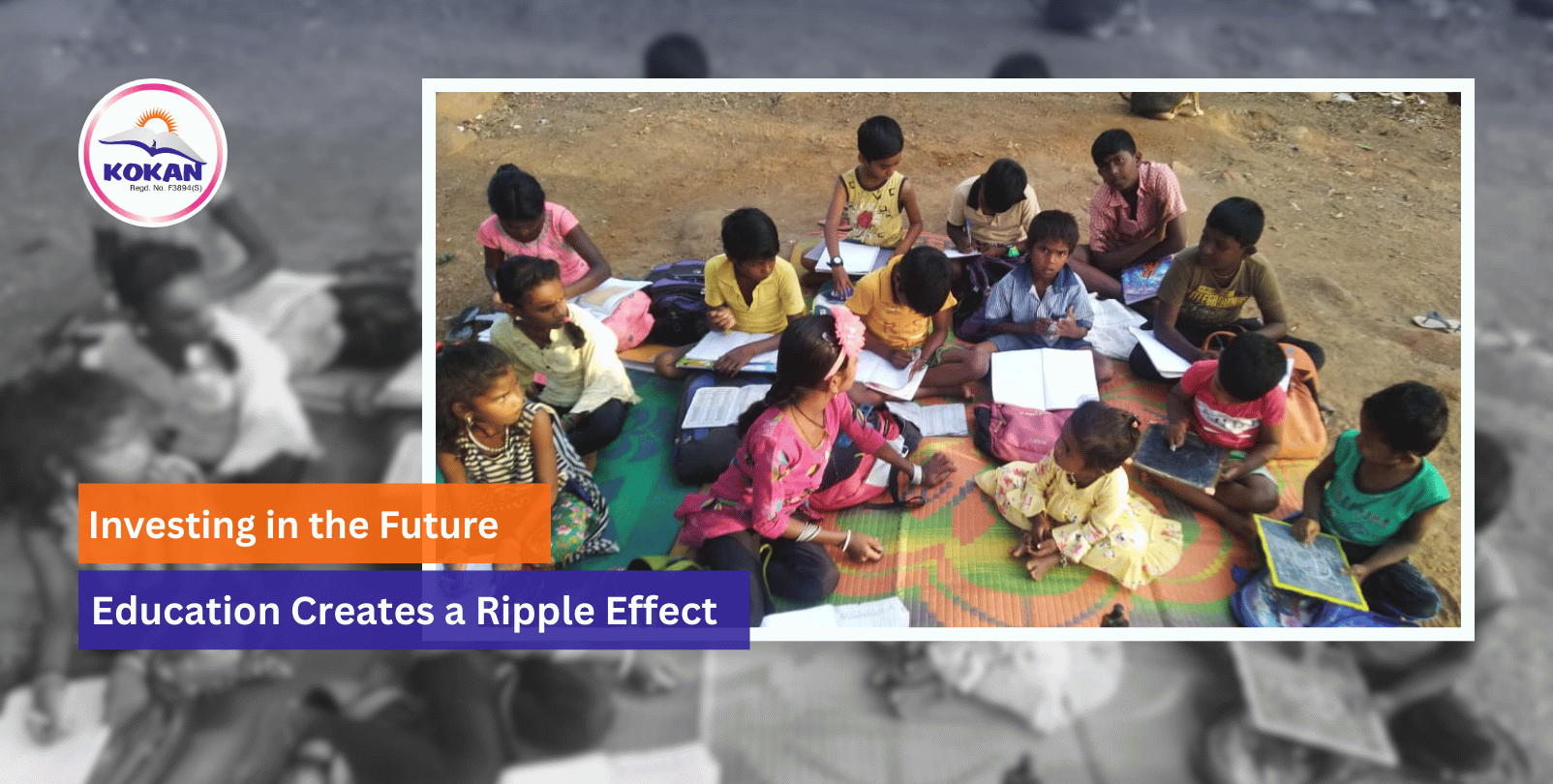
The impact of this comprehensive program extends far beyond a single student mastering a spreadsheet. It creates a domino effect: a child who learns Digital Literacy can now help their older sibling apply for a job; the older sibling, once employed, can afford to keep a younger sibling in school. The mother who learns to use a UPI app can manage the family’s finances better, leading to greater Financial Independence and reducing vulnerability. This interconnected progress is the true meaning of a ripple effect, a wave of empowerment flowing outward from a small center of learning.
Kokan NGO India is leading this quiet, yet profound, revolution in Rural Education. By viewing Digital Literacy not as a technical subject but as a tool for social and economic empowerment, we are building a foundation of Hope and capability for the next generation of India. Our work as a Top NGO in India demonstrates that with focused support and a holistic approach, the digital divide can be bridged, transforming potential into reality.
The vision is clear: to ensure every rural child can face the future with skill and confidence.We invite you to join us in this vital mission. Your decision to donate to Kokan Kala Va Shikshan Vikas Sanstha is an investment that yields exponential returns, not just in education, but in Empowerment, trust, and the sustainablefuture of Rural Communities across India. Partner with Kokan NGO India today and become a force for change.