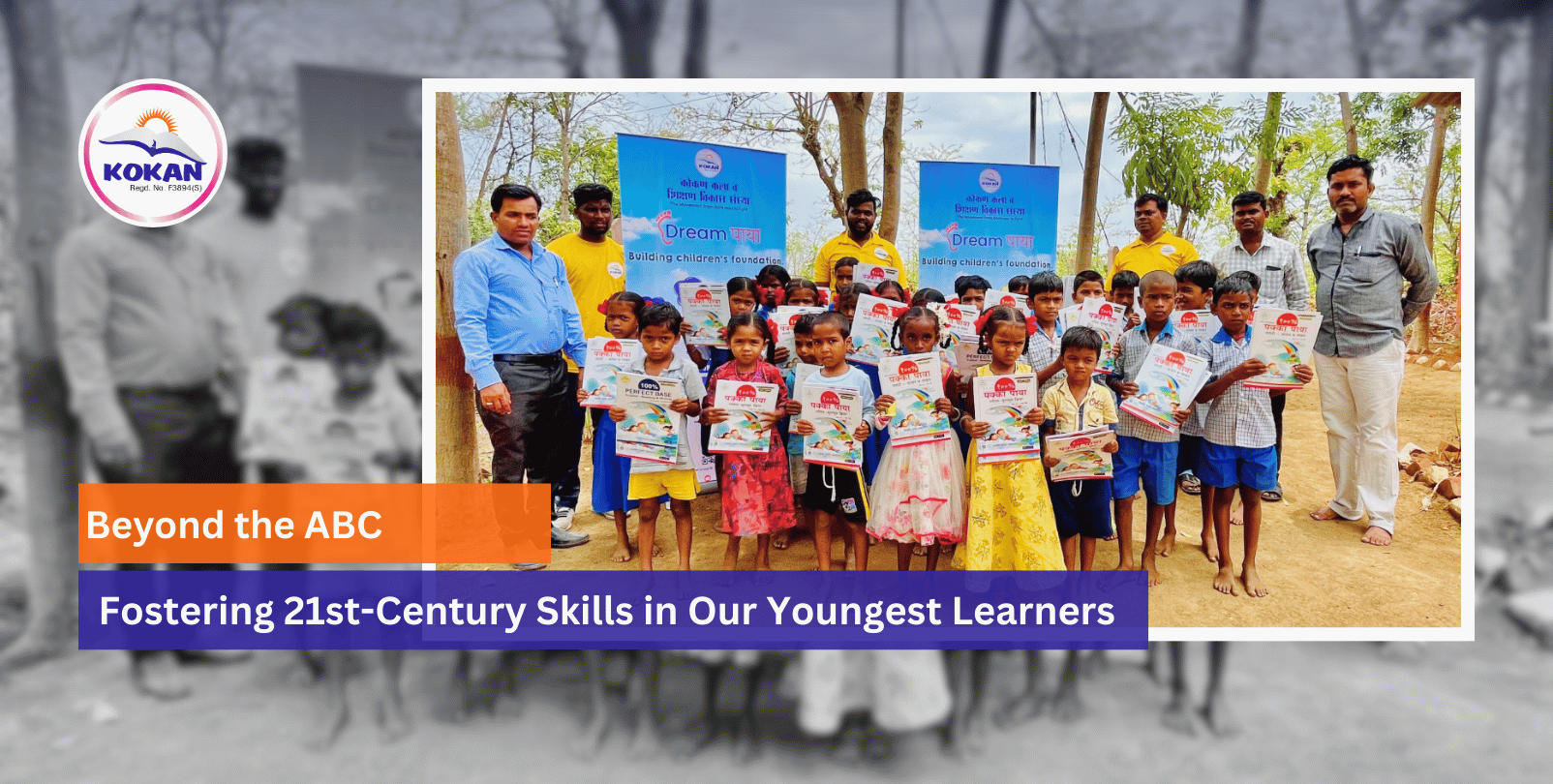
NGO for Education: The world our children are growing into is fundamentally different from the one we knew. It is a dynamic, complex, and rapidly evolving landscape driven by technology, global interconnectedness, and the constant need for creative problem-solving. In this new era, merely memorizing facts or mastering the traditional three ‘R’s (Reading, ‘Riting, ‘Rithmetic) is no longer sufficient for success.
Today’s young learners need the essential 21st-Century Skills: critical thinking, communication, collaboration, and creativity—often called the 4 Cs. These core competencies, which focus on how to think, adapt, and innovate rather than what to recall, are the true keys to navigating tomorrow’s challenges and securing a bright, sustainable future. The educational shift is clear and non-negotiable: education in India must move decisively Beyond the ABCs to embrace holistic development, innovation literacy, and life skills from the very earliest stages.
Recognizing this urgent shift in global and national educational standards, particularly as highlighted by the new education policies in India, Kokan Kala Va Shikshan Vikas Sanstha, widely known as Kokan NGO India, has made the integration of these advanced 21st-Century Skills a central and non-negotiable pillar in its outreach. We understand that in Rural and low-income areas of India, where resources are often scarce and the digital divide is stark, access to modern learning methodologies is crucial for leveling the playing field.
Our targeted Support to Education programs focus on intensive experiential learning, hands-on activities, and deep capacity building for both students and teachers, ensuring that every child, regardless of their background, is equipped to thrive in the complex modern world. Our commitment to high-quality, relevant, and future-ready education firmly establishes us as a specialized Top NGO in INDIA and a leading NGO for Education.
The Necessity to Go Beyond the ABCs: Addressing the Educational Gap in India
While India has achieved remarkable success in ensuring universal access to primary education, the fundamental challenge now lies in the quality and relevance of learning delivered—especially in schools that rely on traditional, resource-constrained methodologies. This learning model often lags critically behind the dynamic demands of the global 21st-century economy.
The Stifling Effect of Rote Learning
The traditional system has long been optimized for rote memorization and standardized assessments. This pedagogical approach tragically stifles the innate curiosity, independent inquiry, and critical thinking skills essential for innovation. Children are taught to learn answers to pass exams instead of learning how to ask insightful questions that lead to real-world solutions. This leaves a vast population of bright students unprepared for careers that demand flexible thinking, rapid technological adoption, and continuous, self-directed learning—a severe impediment to national economic growth.
Bridging the Threefold Literacy Divide
21st-Century Skills extend beyond the 4 Cs to include three essential literacies that are often missing in Rural schooling:
- Information Literacy: The ability to discern fake and real information, identify bias, and effectively use vast digital resources.
- Media Literacy: Understanding the power of communication and how to create and critique media messages effectively.
- Technology Literacy: Moving beyond being mere users of technology to understanding how to leverage, troubleshoot, and even innovate with digital tools.
Without proactive Support to Education in these areas, the existing digital and informational divide will only widen.
The Call for Holistic Support to Education
To truly empower our youngest learners, we must provide robust and holistic Support to Education that fundamentally shifts pedagogical focus. Merely ensuring a child attends school is a 20th-century goal; the 21st-century goal for an effective NGO for Education is ensuring the learning experience is hands-on, deeply engaging, culturally relevant, and explicitly designed to cultivate the full spectrum of 21st-Century Skills right from the foundational stages.
Kokan NGO India’s Framework: Cultivating the 4 Cs and Beyond
As a committed Top NGO in INDIA, our programs are meticulously designed to embed the core 21st-Century Skills into every learning activity, transforming children from passive recipients of knowledge into proactive, resilient, and adaptive global citizens.
1. Creativity: Fostering Innovation Through Hands-on Making
Creativity is the foundational skill for innovation—the ability to approach problems from new, unconstrained perspectives. We actively nurture this.
- Integrated Project-Based Learning (PBL): Our methodology is rooted in PBL, where children work on real-world projects, such as designing a water conservation model or creating a local awareness campaign. This hands-on process necessitates imaginative thinking, resourcefulness, and original idea generation.
- Encouraging Divergent Thinking: We use tools like brainstorming, mind mapping, and ‘What If’ scenarios to explicitly teach children to generate multiple possible solutions, rather than settling for the first obvious answer.
2. Critical Thinking: Developing Rational, Evidence-Based Problem Solvers
We focus on sharpening analytical abilities, enabling students to assess information logically and solve complex problems.
- Inquiry-Based Learning: Our remedial classes utilize the ‘Socratic Method’ adapted for children, focusing on probing questions that compel students to justify their reasoning and challenge assumptions. This is a vital component of intellectual Support to Education.
- Media and Information Analysis: We introduce age-appropriate exercises on checking sources, comparing different news reports, and identifying emotional appeals versus factual evidence, equipping them with crucial Information and Media Literacy skills.
3. Collaboration: Building Empathy and Team Leadership
The modern global economy is fundamentally collaborative. Learning to work effectively in a team, respecting diverse perspectives, and building consensus are essential Life Skills.
- Cooperative Learning Structures: We mandate small, rotating group projects where success depends on interdependence. This forces children to practice active listening, constructive feedback, and delegation, fostering the social skills required for future leadership.
- Conflict Resolution Training: Basic modules teach children non-aggressive, structured methods for resolving disagreements, using empathy to understand different viewpoints—a critical 21st-Century Skill for adult life and successful teamwork.
4. Communication: Articulating Ideas with Clarity and Confidence
Clear, persuasive, and effective communication is the vessel through which all other skills are shared and valued.
- Technology-Enabled Presentation Practice: Beyond simple oral presentations, we introduce basic tools (like drawing simple slides or using interactive boards) to help children structure and deliver their ideas visually and verbally, preparing them for digital communication in India.
- Functional Writing Practice: We move beyond essay writing to focus on functional communication: writing clear emails, formal requests, and persuasive arguments relevant to their future careers or community advocacy.
The Role of Top NGO in INDIA Kokan NGO India: Building Sustainable Capacity
The integration of these advanced 21st-Century Skills is not merely an educational aspiration; it is a direct and necessary investment in the long-term sustainable future of India. Kokan NGO India drives this change through a multi-pronged, systemic approach:
- Empowering Local Teachers with Digital Pedagogy: We provide regular, rigorous, and specialized training to our local teachers and facilitators, equipping them with modern, interactive methodologies like flipped learning and blended learning. This professional development ensures they can confidently deliver Beyond the ABCs learning, ensuring the quality of our NGO for Education programs remains high.
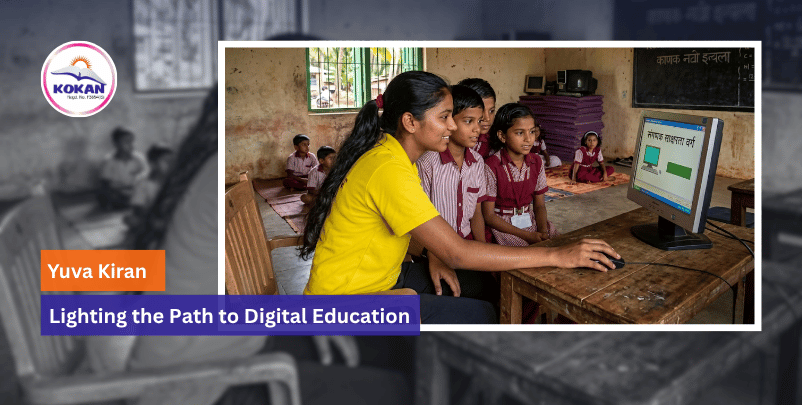
- Building Digital Learning Hubs: As detailed in our recent initiatives, we establish and maintain Digital Learning Hubs in Rural communities. These hubs provide access to hardware, internet connectivity, and skill-based digital content in vernacular languages, directly tackling the Technology Literacy gap and expanding our Support to Education.
- Localizing Curriculum for Relevance: Our educators contextualize lessons using local examples—integrating agricultural challenges for problem-solving activities or using local crafts to teach design thinking. This makes the 21st-Century Skills immediately relevant and applicable, fostering initiative and entrepreneurial spirit from a young age.
- Fostering Life Skills and Adaptability: Beyond the 4 Cs, our curriculum integrates essential Life Skills, including time management, self-discipline, financial literacy, and adaptability—skills necessary to navigate the complexities of life in both Rural and urban settings.
Kokan NGO India: Leading the Educational Revolution with 21st-Century Skills
Moving Beyond the ABCs is both a humanitarian duty and a national necessity. By prioritizing the full spectrum of 21st-Century Skills—Creativity, Critical Thinking, Collaboration, Communication, and the vital digital and life literacies—we are not merely preparing children for an outdated exam structure; we are preparing them for life, leadership, innovation, and a future full of boundless possibility.
Kokan Kala Va Shikshan Vikas Sanstha is proud to be at the forefront of this crucial educational revolution in India. Through our dedication as a leading NGO for Education, we are ensuring that every young learner receives the specialized Support to Education needed to develop a robust 21st-Century Skills toolkit.
Join Top NGO in INDIA today. Your partnership empowers us to continue this vital work—transforming innate potential into global competence for thousands of children and building a foundation of 21st-Century Skills that will secure a brighter, smarter, and truly sustainable future for all of India.